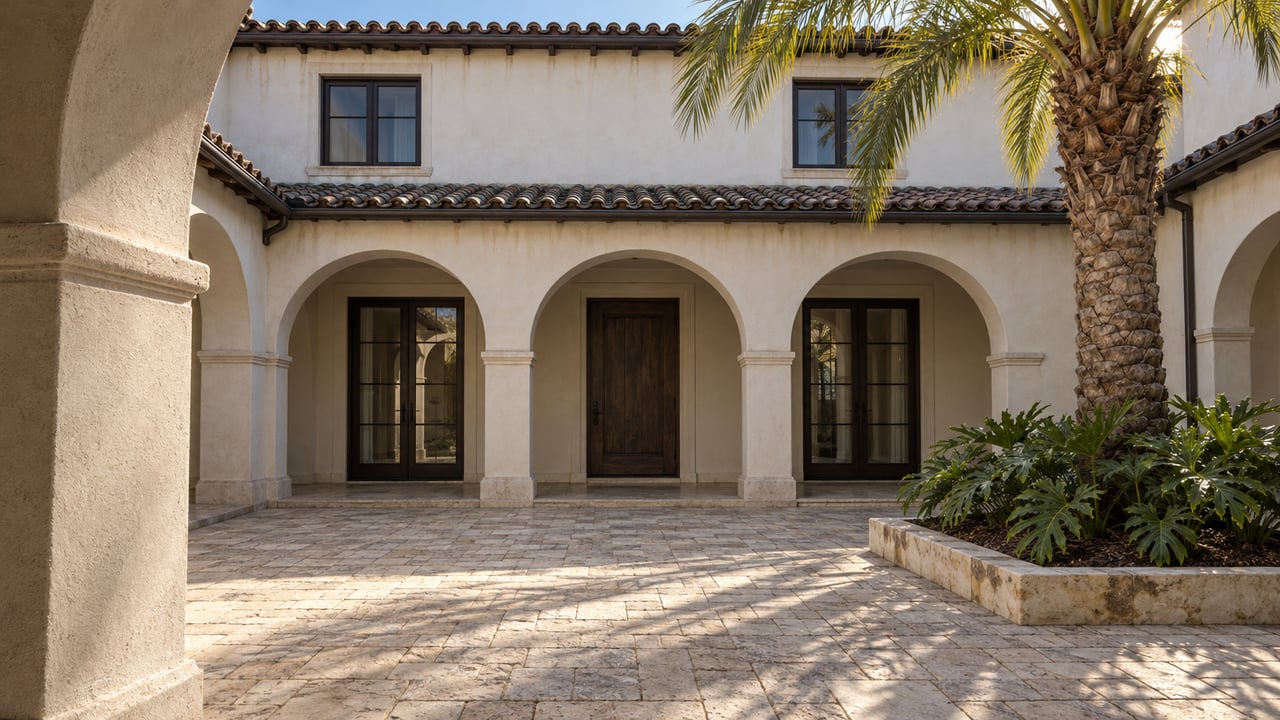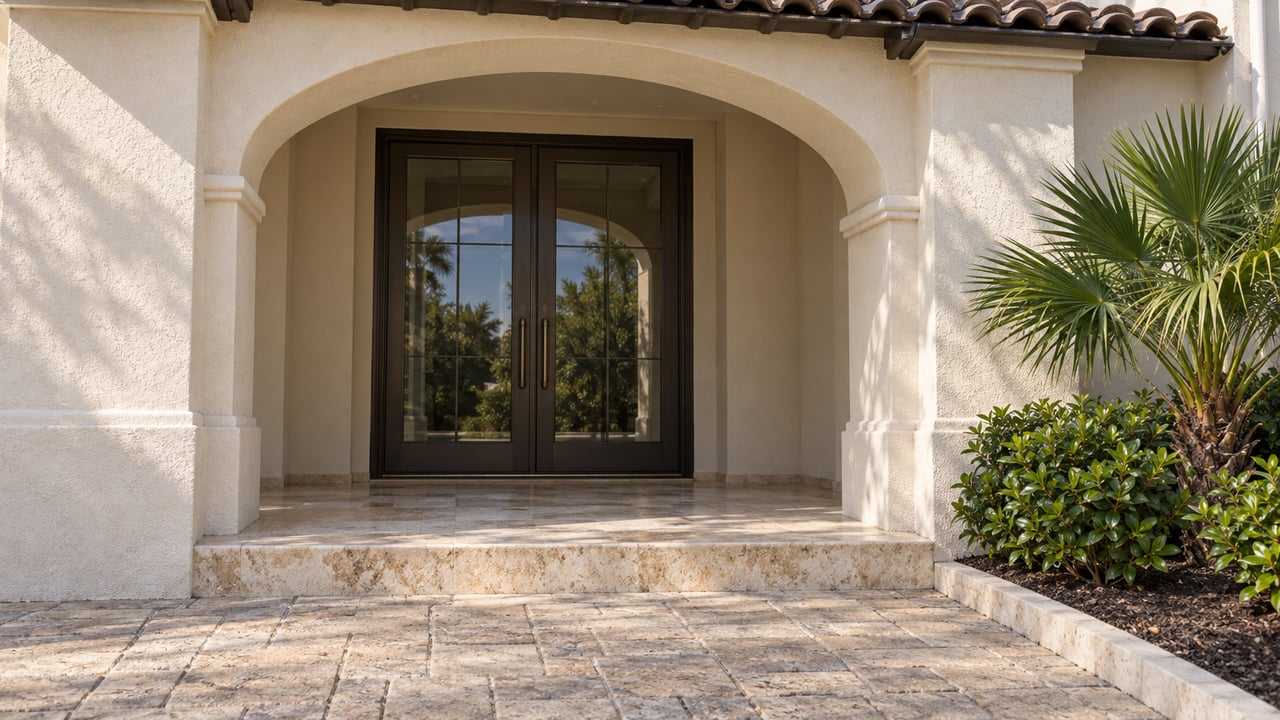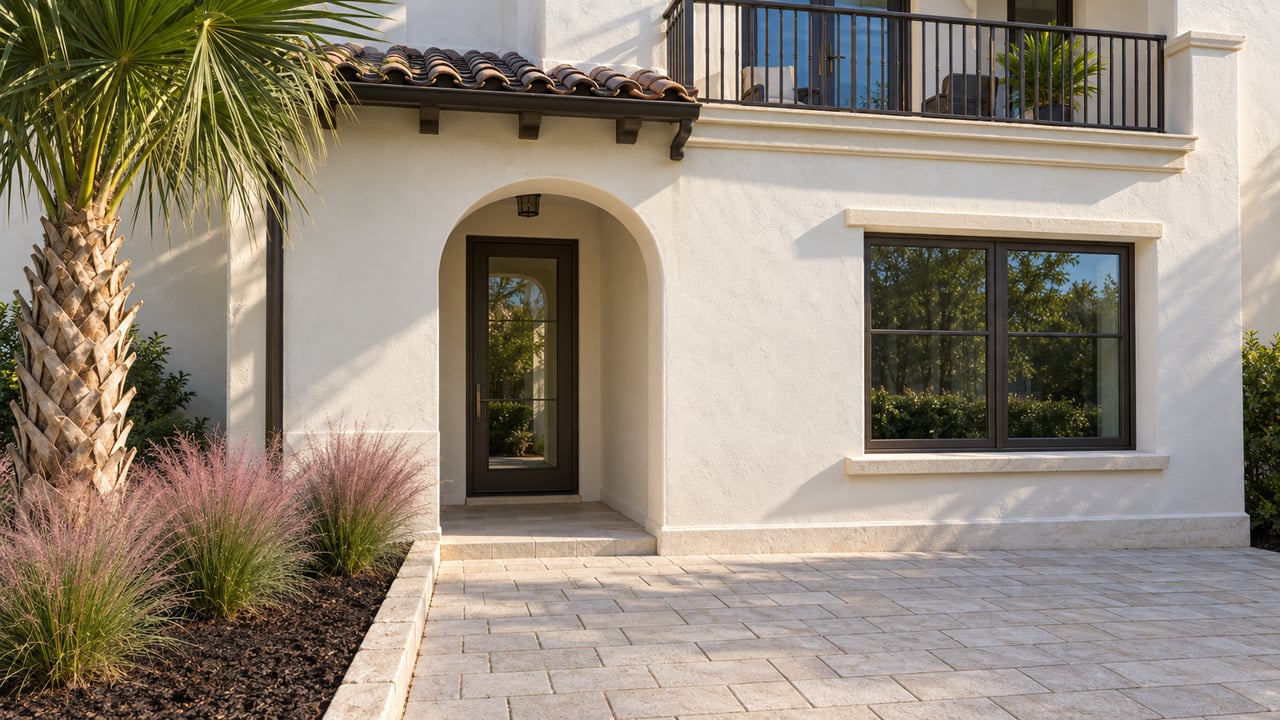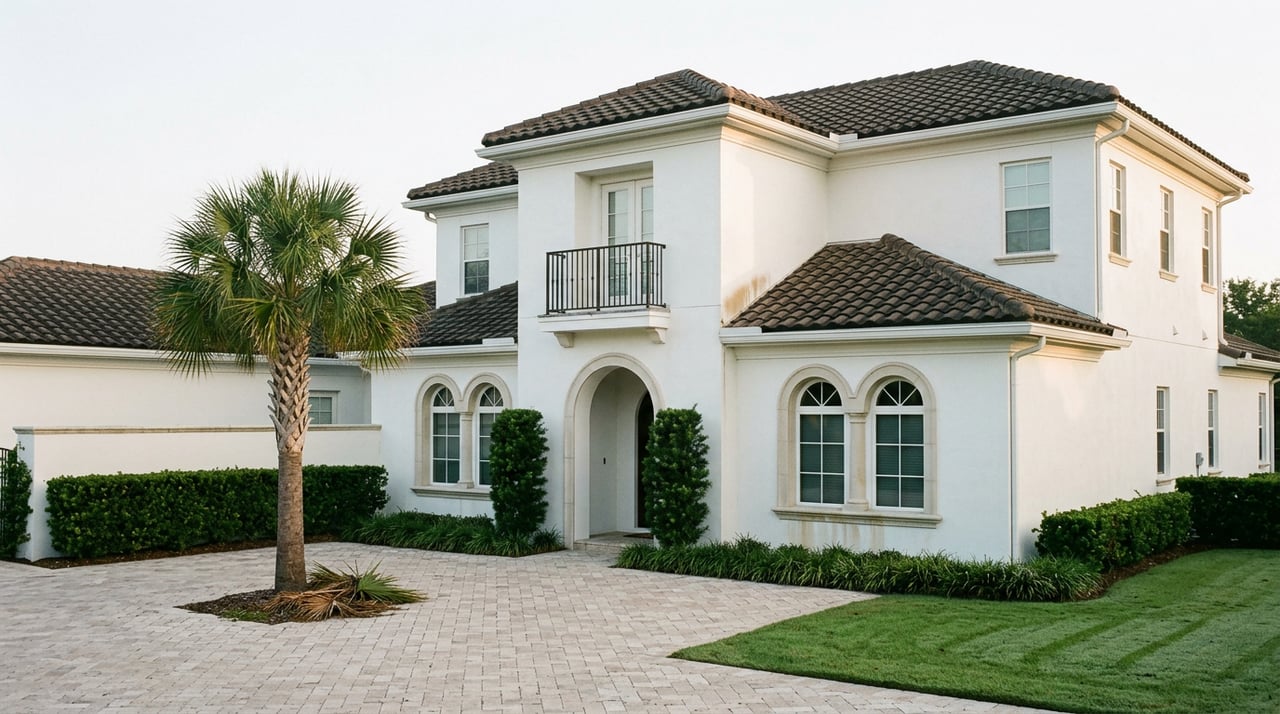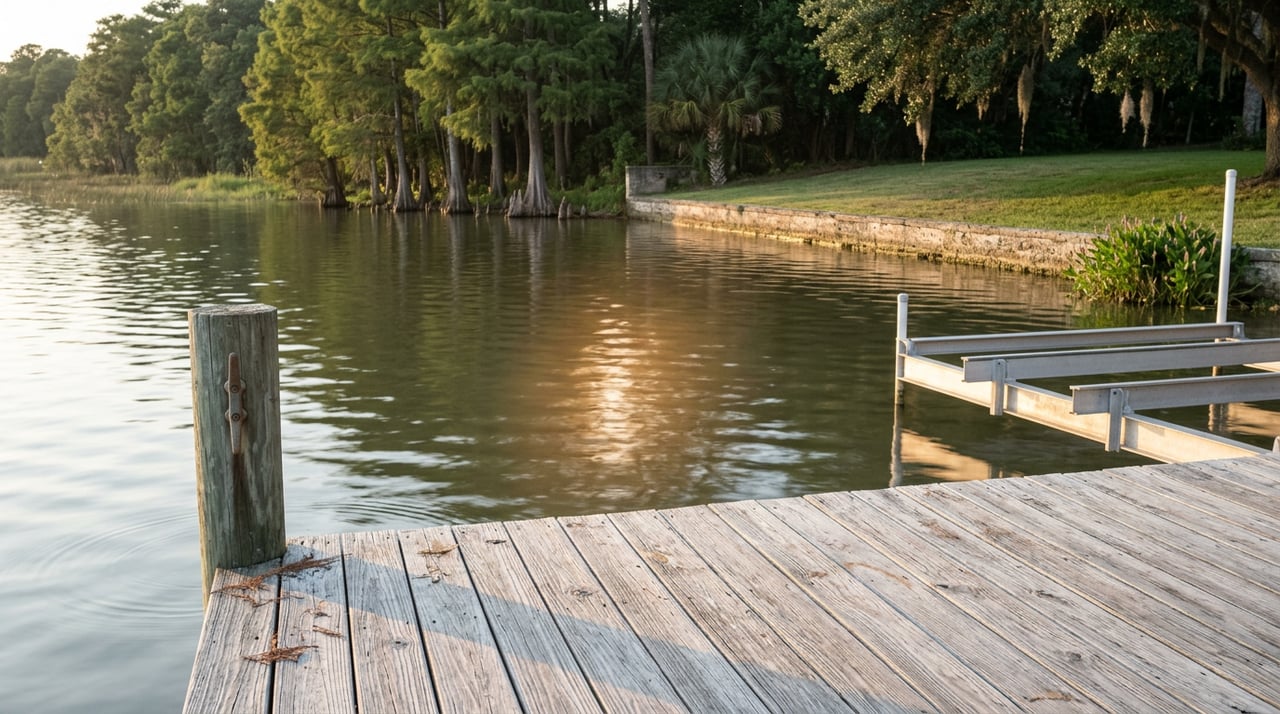
Two homes on the same stretch of Chase Road can look nearly identical from the street. Same stucco, same barrel tile, same three-car motor court. One lists for $1.2 million more than the other. The difference is not square footage or finish level. It is the property's relationship to the water.
On the Butler Chain of Lakes, that distinction is worth more than the pool, the kitchen, and the extra bedroom combined, and it rarely shows up in the listing photos.
Three Words, Three Very Different Products
Real estate listings around Windermere use "lakefront," "lake view," and "lake access" as if they describe the same thing wearing different outfits. They don't. Each term points to a different kind of water-related feature, and the price gap between them explains most of what looks, at first glance, like irrational pricing on the Chain.
| Term | Typical feature |
|---|---|
| Lake view | Sightlines toward the water |
| Community lake access | Community park or dock |
| Deeded lake access | Access described in property records |
The gap between the second and third row is where the money sits. A property with deeded access to the Butler Chain can command $300,000 to $3 million or more than a comparable home with only community access or a view, depending on frontage footage, dock condition, which of the chain's lakes it touches, and how clean the sightline is down the canal. That range is not a rounding error.
This is also why the same subdivision can produce wildly different price tags for houses that look alike from the road. Keene's Pointe, built around Lake Tibet, sells homes anywhere from $800,000 to $3 million or more, and the deeded-access parcels sit at the top of that range even when the house itself is unremarkable. Isleworth's estate compound pricing, which regularly clears $4.9 million to $9.5 million, reflects the same logic scaled up: private, uncontested frontage on some of the clearest water in Central Florida, sold alongside the guard gate and the golf course as one package. Meanwhile, non-waterfront homes in Windermere-adjacent communities can still start around $650,000 as of Q2 2026, which tells you the entry price for the town has almost nothing to do with the number that makes the Chain famous.
The Permit History Behind the Dock
Buyers who do confirm they're getting deeded access often stop their due diligence there. That's a mistake, because the right to have a dock and the right to build or repair one are governed by two separate bureaucracies that don't automatically talk to each other.
The Butler Chain was Florida's first lake system to receive the state's Outstanding Florida Waters designation, granted in 1985, according to the Orange County Water Atlas. Buyers planning shoreline work should check which environmental permits may apply. Standard applications take 60 to 120 days to process, and more unusual projects run longer.
That state permit does not replace a local one. Orange County's Environmental Protection Division requires its own dock construction permit, and only after that is issued can an applicant apply for the county building permit needed to actually pour concrete or drive pilings. It's a two-agency process stacked on top of each other, and the county permit itself is only valid for one year once granted.
There's a wrinkle worth knowing if you're buying rather than building. Some existing docks on the Chain are grandfathered under older rules. A dock that "came with the house" is not the same as a dock with a clean, current permit history, and only the county's Environmental Protection Division can tell you which one you're actually buying.
One procedural detail changed recently enough to matter for anyone permitting now. Effective October 1, 2025, an amendment to Florida Statute 125.022 gives applicants 30 days from the date of a Request for Additional Information letter to respond, with an option to request a waiver of that timeframe in writing. It's a small window, especially on a project already running two to four months.
Not Every Lake on the Chain Behaves the Same Way
Even once access and permitting are settled, the day-to-day experience of owning on the Butler Chain depends heavily on which of its lakes a property actually touches. The Chain's governing rules apply a 300-foot no-wake zone around every shoreline, dock, and swimming area, and that buffer is uniform across the system. What varies is how much open water sits beyond that buffer.
The narrow canal connections between lakes, including the passage linking Lake Tibet-Butler through to Lake Butler known simply as the Windermere channel, are idle-speed only. In practice, a homeowner on a canal lot can ski or wake surf in the middle of Lake Tibet-Butler or Lake Butler itself, but reaching that open water from a private dock means a slow, patient transit through the no-wake zones first. A main-lake lot skips that transit entirely, which is part of why main-lake frontage on Lake Butler or Lake Down consistently outprices canal-front lots with technically identical navigable access.
Public access to any of this is thinner than the Chain's reputation suggests. Beyond private docks and community facilities, boaters have exactly three public entry points: R.D. Keene Park's boat ramp in Windermere, the town's own ramp off Main Street that puts boats directly onto Lake Butler, and a smaller, less developed access point at Brogdon Point on Lake Down where parking is limited. That limited public access is the practical, on-the-ground version of the scarcity that shows up as a price premium in the listing data.
The system's day-to-day rules are set by the Windermere Water Navigation Control District, created by the Florida Legislature in 1963 and known today as the Butler Chain of Lakes Advisory Board. Its five members, appointed to four-year terms, write the dock construction standards, oversee canal maintenance, and coordinate the Butler Patrol that enforces boating rules across the chain. It's a small, standing piece of local government that most buyers never hear about until their dock permit lands on its desk.
The Shoreline Comes With Its Own Contract
Owning the shoreline itself carries obligations that a lot of buyers discover only after closing. Orange County has rules for shoreline vegetation and dock placement, and some shoreline work may require a permit.
The county has also taken direct action to protect water quality on the Chain, including an alum treatment facility that came online on Lake Down in 2016 to help manage nutrient loading flowing into the system. It's a reminder that the water clarity buyers are paying for is actively maintained, not simply a natural given, and that shoreline landscaping choices on any one property are treated as part of a shared system rather than private taste.
What a Recent Listing Shows About How This Gets Priced
An 11-acre Windermere estate that came to market in May 2026 for $27 million offers a clean example of how sophisticated sellers now market access as its own asset. According to GlobeNewswire, the property carries more than 440 feet of frontage on Cypress Lake and has access to the Butler Chain through a secondary parcel that includes a private community boat ramp. That's not a passing amenity mention. It's the seller's team drawing a clear line between the house's private lake and the separately valuable route to reach the rest of the chain, because at that price point, buyers already know to ask.
Before You Write the Offer
The practical version of all this comes down to three checks that a title search alone won't cover. Confirm the exact language in the deed describing access, not the marketing description in the listing. Pull the permit history for any dock or seawall on the property directly from Orange County's Environmental Protection Division, And verify whether access runs through a private, deeded easement tied to that parcel or through a community agreement.
None of that shows up in a walkthrough. All of it shows up at closing, or worse, after.
If you're weighing a Butler Chain property or comparing Windermere against another Central Florida lake market, Andrea Alonso works this exact terrain daily, from verifying deed language before an offer to coordinating the permit history search that protects you after one. Let's connect. Start your Florida search with someone who reads the fine print before you have to.
This article is general information, not legal, tax or financial advice. Consult a qualified professional about your situation.